
Ship Hull Surface Preparation
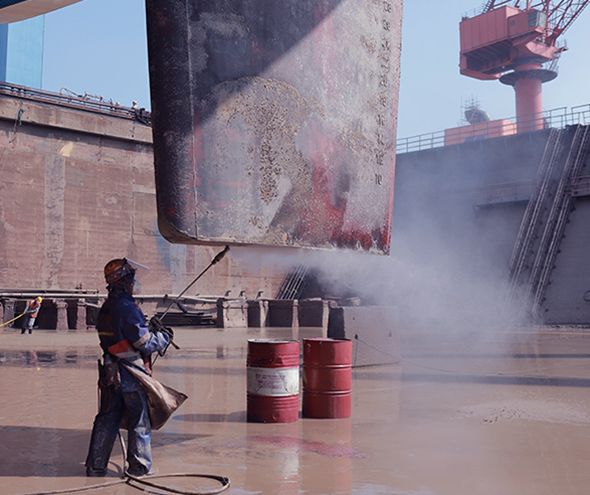
Proper surface preparation is crucial in the marine and shipbuilding industry, as many coating failures result from inadequate cleaning. Ensuring a clean and well-prepared hull surface is essential for the coating's durability and effective corrosion protection in ship construction, ship maintenance, and ship repair.
Comparison of Cleanliness Standards According to ISO 8501/SSPC-NACE
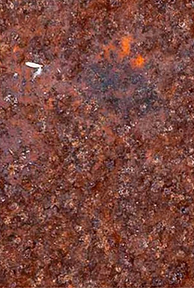
- Original Coating
- No Preparation of Surface

- Sa 1/Wa 1/WJ 4
- Light Cleanning

- Wa 2/WJ 3
- Thorough Cleaning

- Sa 2/Wa 2.5/WJ 2
- Very Thorough/Near-White Metal Blast Cleaning
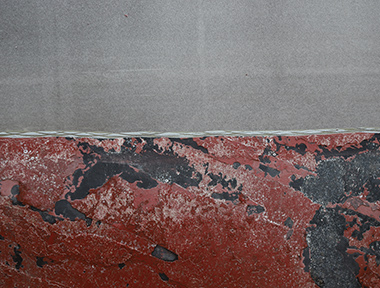
- Sa 2/Wa 2.5/WJ 2
- The surface prepared by the hull coating removal vehicle
Comparative Analysis: Ship Hull Cleaning Methods
| Items | Abrasive Blasting | Manual hydroblasting | Wall-climbing robot | Treatment Carrier |
|---|---|---|---|---|
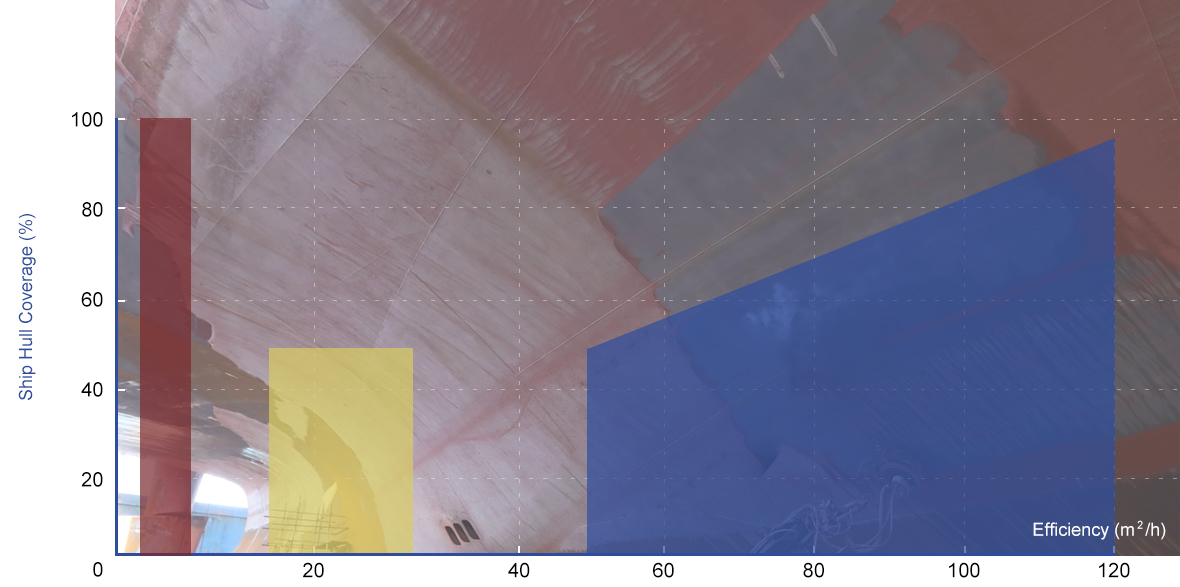
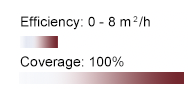
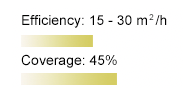
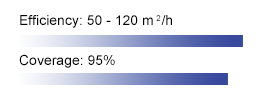
| Efficiency | 6 - 8 ㎡ /h | 6 - 8 ㎡ /h | 15 - 30 ㎡ /h | up to 50/120 ㎡/h |
| Required Equipment | Scaffold, abrasive materials, blasting pot,
air compressor, and containment system, etc. | Scaffold, high-pressure water jet systems,
hoses, UHP pump, protective gear, etc. | Robot unit, UHP pump, electronic cabinet,
long electronic wires, fall arresters, and safety harnesses, etc. | All-in-one system with built-in electronic
and recovery modules |
| Required Labor | High labor demand for setup, operation, and
maintenance | Very high labor demand for manual operation
and safety oversight | Moderate labor demand for setup and
monitoring | Low labor demand due to automation and remote
operation capabilities |
| Working Coverage | 100% | 100% | 45% | 95% |
| Cleaning Effect | Manual cleaning cannot reach the request
result one time, needs to be cleaned several times, and prepared surface is less
consistent | Manual cleaning cannot reach the request result one time, needs to be cleaned several times, and prepared surface is less consistent | Effective in accessible areas but may
struggle with complex geometries | Consistently high cleaning quality, meeting
near-white metal standards (WJ-2 / Wa 2½) |
| Risk Points | High risk of dust and particulate exposure, potential for equipment-related injuries | High risk of respiratory issues, physical strain, and accidents | Potential for mechanical failure and falling risk due to excessive water pressure and the magnet's adsorption ability weakness | Minimal |
| Environmental Impact | Extremely air pollution | Contaminate local water bodies and requires large volumes of water and energy, potentially impacting marine ecosystems and local resources, and proper waste management is crucial to mitigate these environmental risks | Recycling and sewage treatment facilities must be equipped | Dust-free, water-saving and environmentally friendly with 99% wastewater recovery |

Manual Blasting

Magnetic Hull Crawler

D10

X25
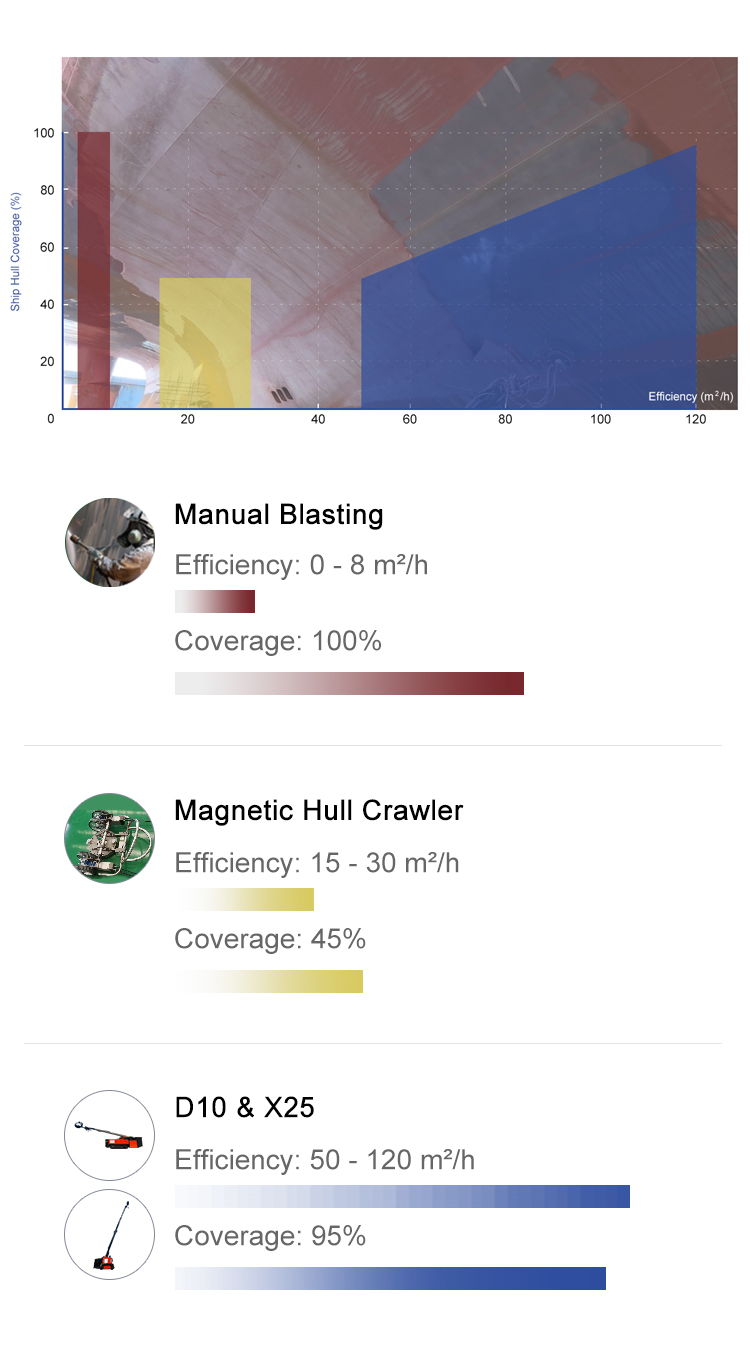
*All data is sourced from third-party, publicly available information and HYDWIN's
product parameters. Actual performance may vary based on working conditions, environmental factors,
water flow, pressure, etc. Please note that the provided information is for reference only and
should be verified with specific operational conditions.