Every storage tank eventually has to be opened, emptied and cleaned — for inspection, for a change of product, or because accumulated sludge has taken up usable volume. How that job is done determines how long the tank is out of service, how much product is recovered and how much risk the crew is exposed to.
The problem with manual cleaning
Traditional tank cleaning sends people into a confined space with breathing apparatus, shovels and hand lances. It is slow, physically exhausting and carries every hazard a confined space can present: oxygen deficiency, hydrocarbon vapour, unstable footing on sludge, and the jet itself.
It also tends to leave product behind. Heavy hydrocarbon sludge that could have been recovered and sold is instead handled as hazardous waste, at a cost rather than a return.
How automated jetting changes the job
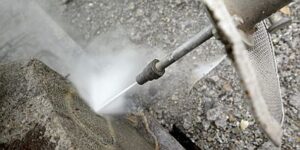
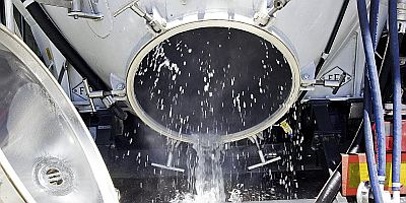
An automated system lowers a rotating jet head through an existing tank opening. The head is driven in a programmed pattern so that the jet sweeps the full internal surface, while the loosened sludge is pumped out and sent to separation.
Three things follow from this. The crew stays outside the tank for most of the work. The cleaning is systematic rather than dependent on where an operator can reach. And because the recovered material is pumped rather than shovelled, a much larger fraction of it can be separated and returned to process.
What determines the cleaning time
Tank cleaning duration is driven by the nature of the deposit more than by tank size. Light sediment in a fuel tank washes out quickly. Heavy paraffinic sludge in a crude tank may need warm water, several passes and a recirculation loop that reuses the separated oil as a solvent.
Before planning a shutdown, establish:
- the type and estimated volume of the deposit;
- the number, size and position of available openings;
- whether the atmosphere requires explosion-protected equipment;
- where the recovered material will go and how it will be separated;
- the acceptable final cleanliness — visual inspection, coating application or entry for repair all set different targets.
Pressure selection
Most tank cleaning is done between 1,000 and 2,500 bar. Below that range, adhering deposits are not fully removed; above it, the additional pressure is usually spent on cutting rather than on transporting material out. Where the tank has an internal coating that must be preserved, pressure must be set from the coating specification, not from the deposit.
Planning the shutdown
The cleaning itself is rarely the longest item in a tank shutdown. Isolation, gas freeing, permits, scaffolding and final inspection usually take longer. The value of an automated system is that it compresses the one part of the sequence that is both time-consuming and hazardous, and makes its duration predictable enough to plan around.
Working with Forajet
We supply WOMA ultra-high-pressure pumps and automated tank cleaning equipment in Türkiye, along with commissioning, operator training and service support. Send us the tank details and the deposit type and we will work through the equipment selection with you.